What belongs in an infants and toddlers supplement routine?
For most families, the goal is not to build a huge routine. It is to fill real gaps without doubling up on nutrients your child already gets. In this collection, you'll see a few common categories: multivitamins, single nutrients like vitamin D or iron, minerals like zinc, omega-3s, and digestive support.
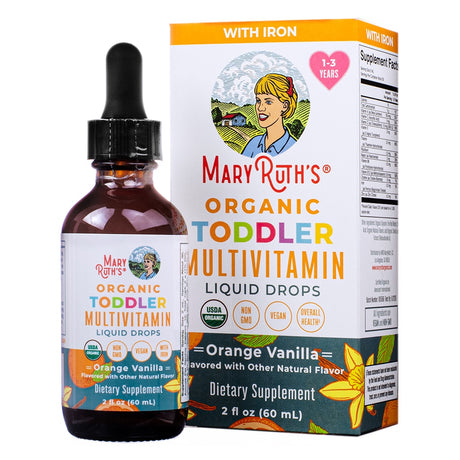
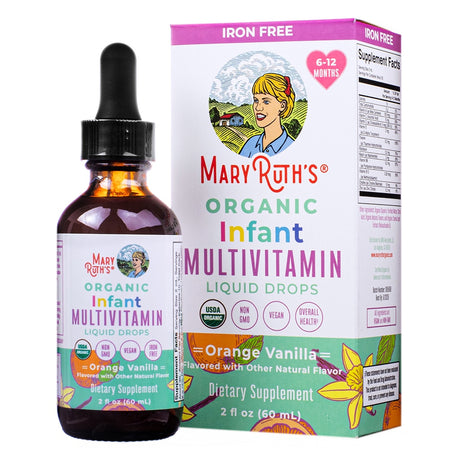
Some products cover a lot at once. MaryRuth Organic Infant Multivitamin Liquid Drops - Orange Vanilla and MaryRuth Organic Toddler Multivitamin Liquid Drops With Iron - Orange Vanilla are practical starting points if you want several nutrients in one serving. Others are more targeted. MaryRuth Infant & Toddler Vitamin D3 Organic Liquid Drops focuses on vitamin D3 only, while MaryRuth Organic Toddler Iron Drops - Grape is for parents comparing iron options specifically.
That difference matters. If your child already takes a multivitamin with iron, you usually do not want to casually add a separate iron product on top. The same goes for D3 and zinc. The first step is to read the Supplement Facts panel and compare the serving for your child's age, not just the front label.
How these products support growing kids
Early childhood is a stage of fast growth, changing eating habits, and unpredictable cooperation. Some kids eat a wide variety of foods. Others go through phases where only a few foods seem acceptable. Supplements can help support nutrient intake during those stretches.
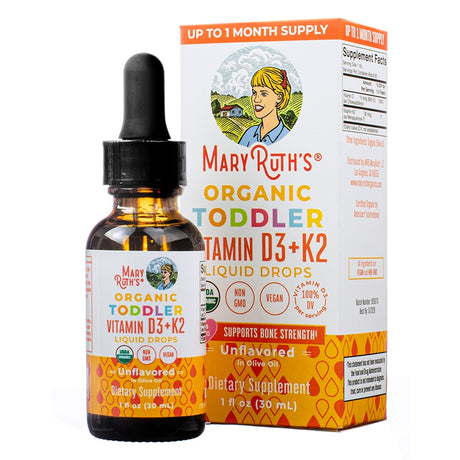
Vitamin D is one parents ask about often because it helps with calcium absorption and supports bone development and immune function. If you want a simple unflavored option, MaryRuth Infant & Toddler Vitamin D3 Organic Liquid Drops is easy to work into a routine. If you're comparing a toddler formula that pairs D3 with K2, MaryRuth Organic Toddler Vitamin D3 + K2 Liquid Drops is worth a look. Some parents prefer that combo for a more specific bone-health formula. Others prefer plain D3 because it keeps things simpler.
Iron is another common point of comparison, especially for toddlers with limited diets or for families who were specifically told to watch iron intake. MaryRuth Organic Toddler Iron Drops - Grape uses Ferrochel, a chelated form of iron known as ferrous bisglycinate, which many parents find easier to tolerate than harsher forms. But it still helps to check whether the formula is a standalone iron, like the grape drops, or built into a multivitamin, like the toddler multivitamin with iron.
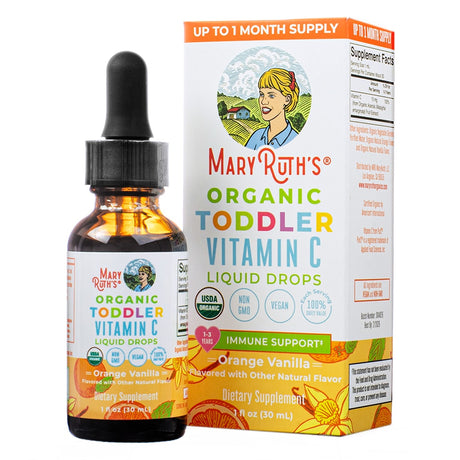
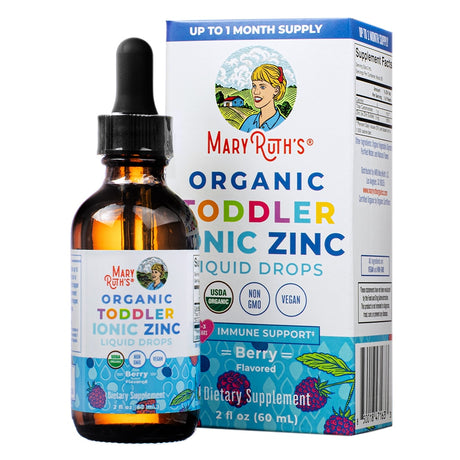
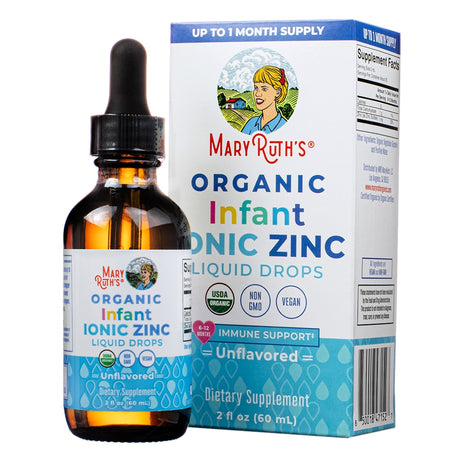
Zinc and vitamin C are usually chosen for seasonal immune support and general nutritional backup. MaryRuth Organic Toddler Liquid Zinc Drops - Berry and MaryRuth Organic Infant Ionic Zinc Liquid Drops let you choose by age and flavor preference. Omega-3s, like MaryRuth Infant & Toddler Omega-3 Liquid Drops, are often chosen by parents who want extra support for brain and visual development.
How to choose between infant drops, toddler drops, and gummies
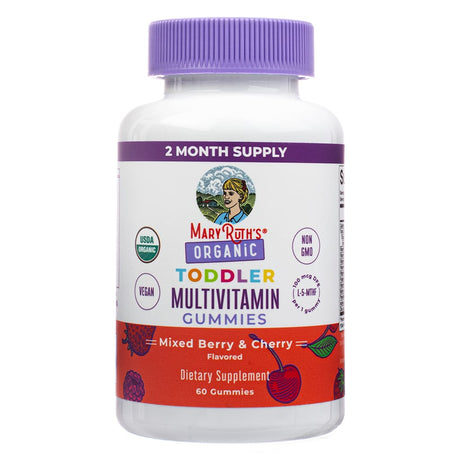
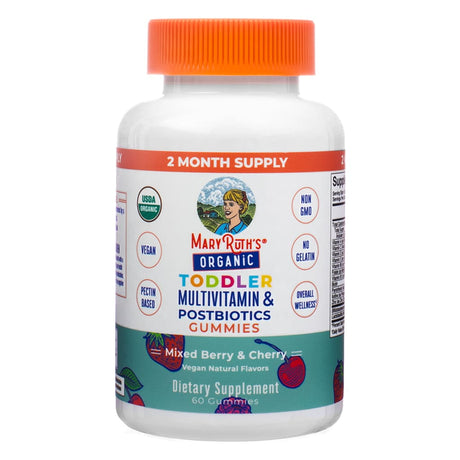
Age range comes first. Infant formulas and toddler formulas are not automatically interchangeable because serving sizes and nutrient amounts are set up differently. Use only as directed for your child's age and serving size. If a label says infant, follow the infant instructions. If it says ages 2+, like MaryRuth Organic Toddler Multivitamin Gummies - Mixed Berry & Cherry, save it for toddlers who can safely chew gummies.
Format matters too. For babies and younger toddlers, liquid drops are usually the easiest place to start. You can measure them carefully and mix them into a small amount of food or liquid if the label allows. Gummies are more convenient for older toddlers, but they are not always the best pick if you need iron, since many gummy multis do not include it.
A common comparison is this: if your toddler is a decent eater and you just want basic coverage, the toddler gummies may be enough. If your toddler is picky and your pediatric practitioner has mentioned iron, it makes more sense to compare the Toddler Multivitamin Liquid Drops With Iron against the standalone Toddler Iron Drops - Grape instead of defaulting to gummies.
Then check for overlap. If you use a multivitamin with iron, look at whether you're also giving separate D3, zinc, or vitamin C. Sometimes a parent ends up with a multivitamin, extra D3, extra zinc, and extra iron because each product sounded useful on its own. A better approach is to total up the nutrients across all products and keep the routine intentional.
What to compare on the label
Start with the serving size for your child's age. Then compare the actual nutrient amounts per serving, not per bottle. A 2 fluid ounce bottle can last very different lengths of time depending on how much the serving is.
Check whether the product is a full multivitamin or a single nutrient. Compare the nutrient form too, especially for iron and vitamin D. Ferrochel is one iron form you'll see here, and D3 is the form used in the MaryRuth vitamin D drops. Flavor and delivery matter as well. Unflavored drops can be easier for sensitive kids, while berry or orange vanilla may go over better with toddlers. Also make sure the product is for infants, toddlers, or both, because that helps prevent serving-size mistakes.
If digestive comfort is the main concern, a targeted product can make more sense than a broad multivitamin. MaryRuth Organic Infant Precision Probiotic Colic Drops is a good example of that kind of focused approach. If you want to browse similar options, you can also explore our kids health collection.
Who should talk with a practitioner first
Please check with your pediatrician or another qualified practitioner before starting supplements if your child was born premature, takes medication, has feeding difficulties, is already using fortified formula plus supplements, or has been told to monitor iron or vitamin D intake. This matters even more before using separate iron products or stacking multiple nutrient formulas.
If you want more personalized guidance, our team can help you compare labels. You can also learn more about practitioner support on our experts page or reach out through our contact page.
These statements have not been evaluated by the Food and Drug Administration. These products are not intended to diagnose, treat, cure, or prevent any disease.



 Start your journey
 Contact Us